
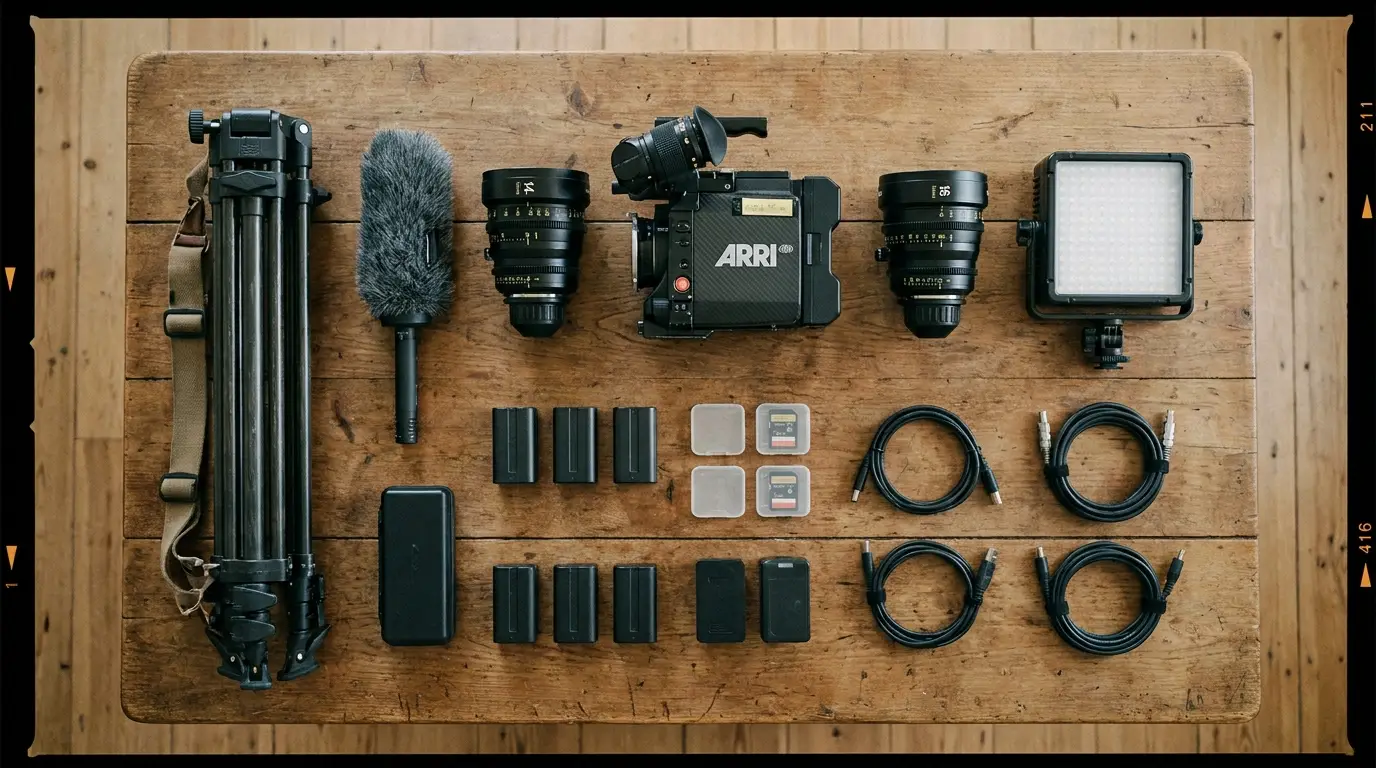
Walk into any camera store and you could spend a fortune in an afternoon. But here's the good news: you need far less than the shelves suggest. A great video kit is like a good kitchen — it's not about owning every gadget, it's about having the essentials and knowing how to use them.
Here's the core gear that actually moves the needle, roughly in the order it earns its place in your bag.
1. A Camera and a Lens or Two
Yes, you need a camera — but as we always say, it's the paintbrush, not the painter. Any modern mirrorless or cinema body will do beautiful work. More important than a second body is a good lens or two: a versatile zoom for flexibility and a bright prime lens (think f/1.8) for that gorgeous low-light, shallow-focus look. Lenses outlive camera bodies, so it's wise to invest here.
2. Rock-Solid Support
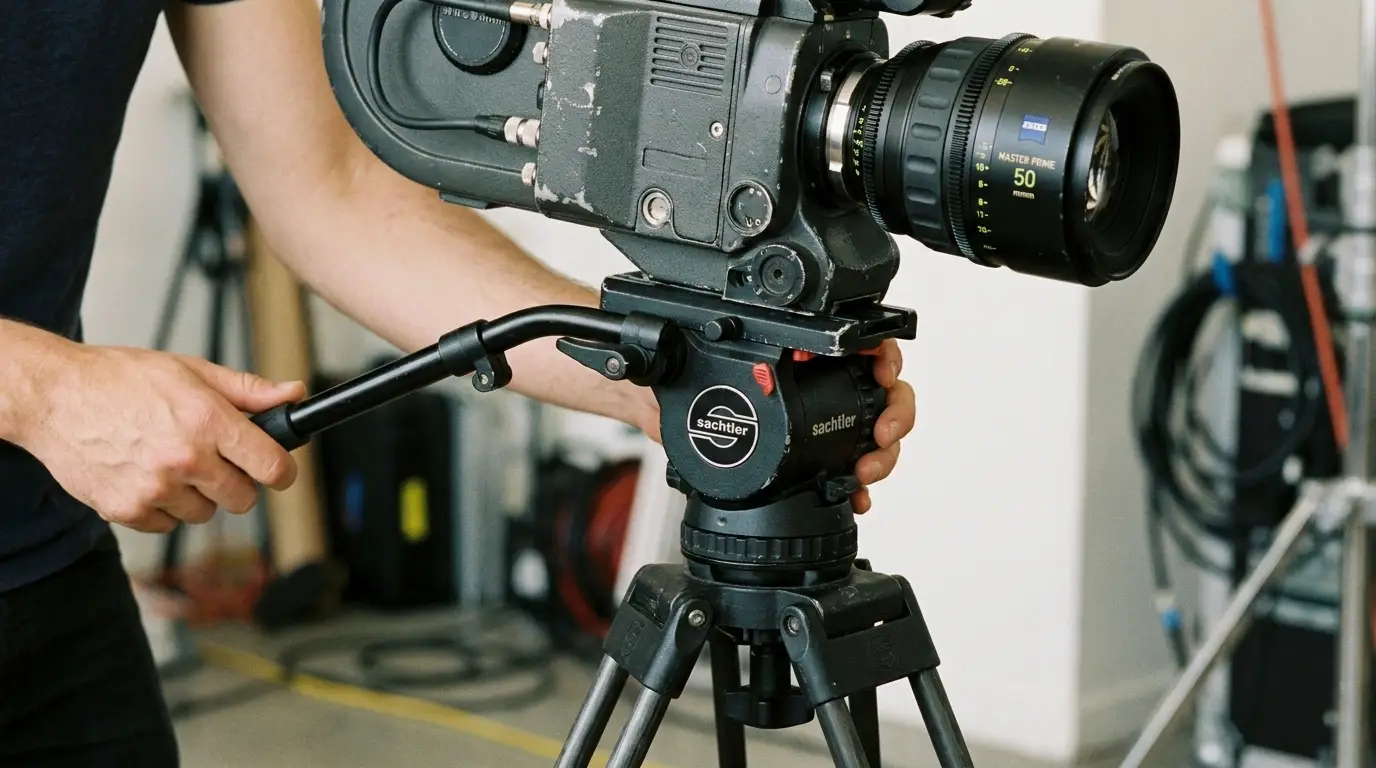
Nothing screams "homemade" like shaky footage. A solid tripod with a fluid head gives you smooth pans and rock-steady interviews. Add a gimbal when you want gliding, moving shots. Support is the cheapest upgrade that instantly raises your production value — it's the tripod, not the camera, that often separates "filmed it" from "produced it."
3. Sound: The Half Everyone Forgets

If gear were a band, audio would be the bass player — you don't always notice it, but the song falls apart without it. A dedicated microphone (a lav for interviews, a shotgun for everything else) is one of the highest-impact purchases you can make. We go deep on this in our guide to better audio, but the short version: never, ever rely on the built-in camera mic.
4. Light You Can Control
The sun is free but unreliable, and overhead office lights are nobody's friend. A couple of LED lights you can move, dim, and soften give you control over the single most important ingredient in the image. Even one good light plus a bounce board transforms a shot. (More in our lighting gear guide.)
5. The Unsung Essentials
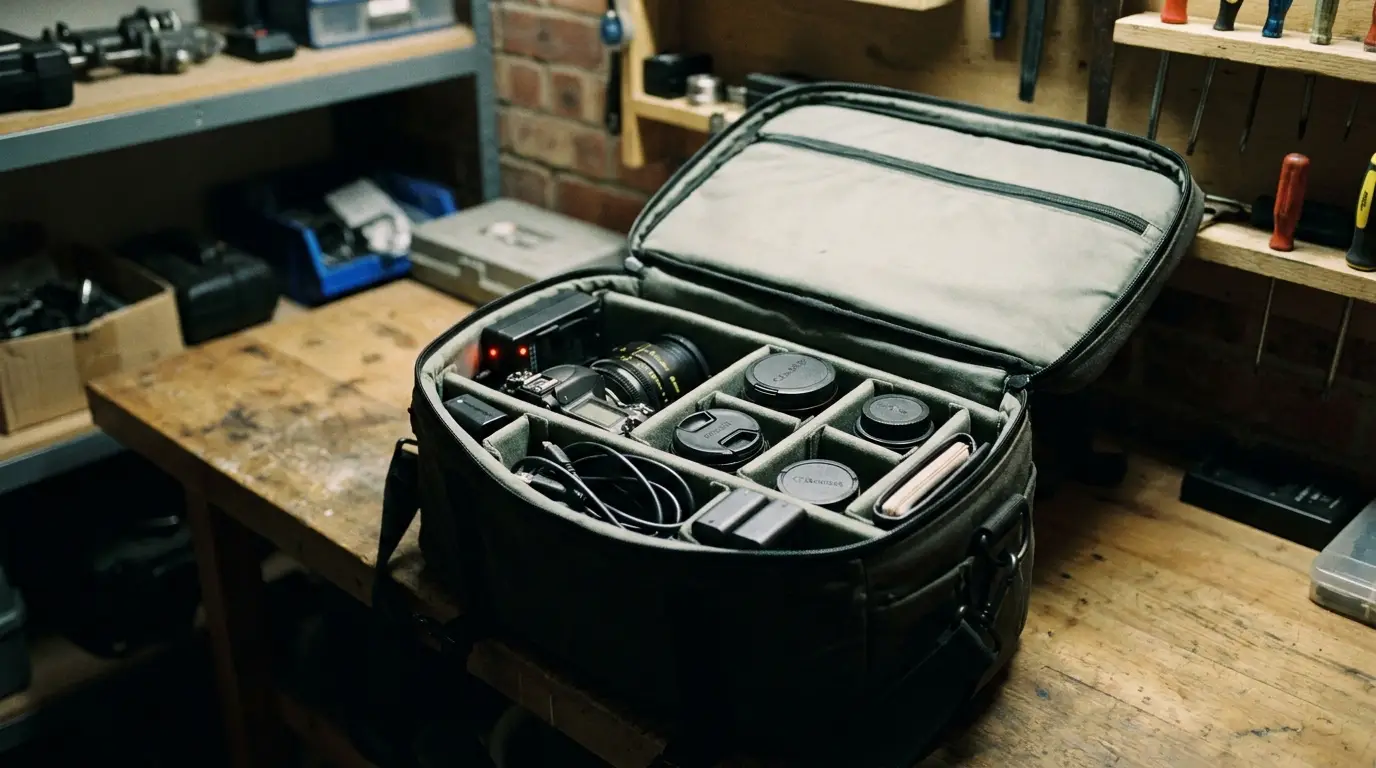
These aren't glamorous, but they save shoots: spare batteries (always more than you think you'll need), plenty of fast memory cards, and a padded bag to keep it all organized and protected. Batteries and cards are fuel — the most expensive gear in the world is useless when the tank hits empty. A label-maker and a few extra cables wouldn't hurt either.
The Essential Kit Checklist
- Camera body + a versatile zoom and a bright prime lens
- Sturdy tripod with a fluid head (and a gimbal for movement)
- External mic — lav for interviews, shotgun for the rest
- One or two controllable LED lights + a bounce board
- Spare batteries (lots) and fast memory cards
- A padded bag to protect and organize it all
"Beginners obsess over the camera. Pros spend their money on support, sound, and light — because that's what the audience actually feels."
Build Smart, Not Big
You don't need to buy it all at once. Start with a camera, a lens, a tripod, and a mic, then add light and extras as your work grows. A lean kit you know inside and out beats a closet of gadgets you've never figured out. Master the essentials, and your videos will look and sound like you spent far more than you did.
Rather skip the gear-buying altogether and just get great video? That's literally our job. Let's talk about your project.

James is a creative professional and marketing leader with 20+ years across film, animation, broadcast production, and brand marketing. He founded MediaMarvels to help businesses tell their stories with a filmmaker's eye and a marketer's mindset.