
If the camera is the paintbrush, light is the paint. You can own the fanciest camera on earth, but without good light, your video will always look a little… off. The encouraging news? Lighting gear has never been cheaper or easier, and you can get a beautiful look with surprisingly little. Let's demystify what to actually buy.
First, a quick principle that makes every purchase make sense: the bigger the light source, the softer (and more flattering) the light. Most lighting gear is really just clever ways to make a light bigger, softer, or more controllable. Keep that in mind and the shopping gets simple.
Start With One Good Light
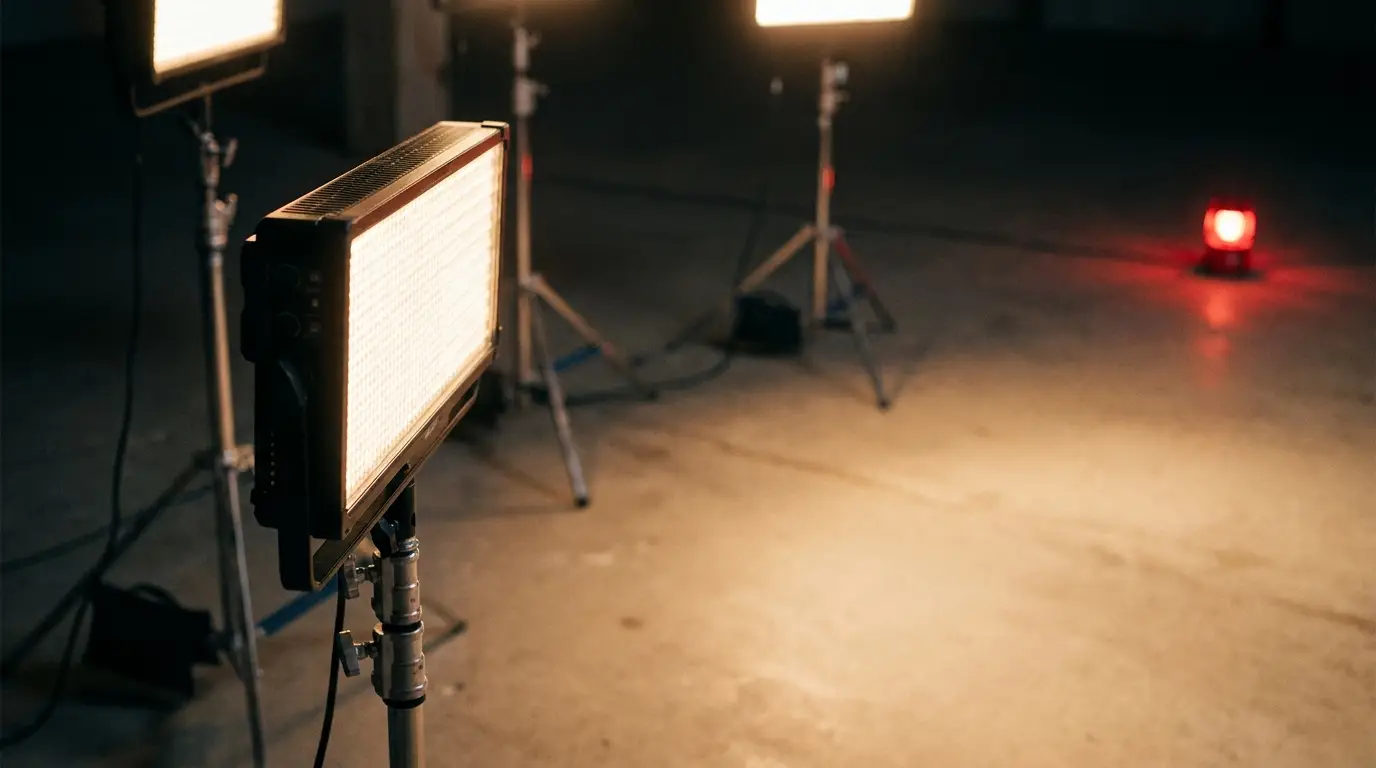
You don't need a three-light kit on day one. One quality light you can dim and soften, plus a cheap white bounce board for fill, will already make your video look intentional. Master one light, then add a second (backlight) and a third (fill). Build the kit one purpose at a time — it's cheaper and you'll actually understand what each light does.
The Three Families of Video Light
Almost everything you'll see falls into three camps. Here's the plain-English version of each.
LED Panels — The Friendly All-Rounder
Flat panels of LEDs that throw soft, even light. They're affordable, lightweight, often battery-powered, and dead simple — turn the dial, done. Great for interviews, talking heads, and tutorials. If you buy one thing, a quality bi-color LED panel (often around $100–$150) is the safe, versatile starting point.
COB Lights — The Punchy Powerhouse
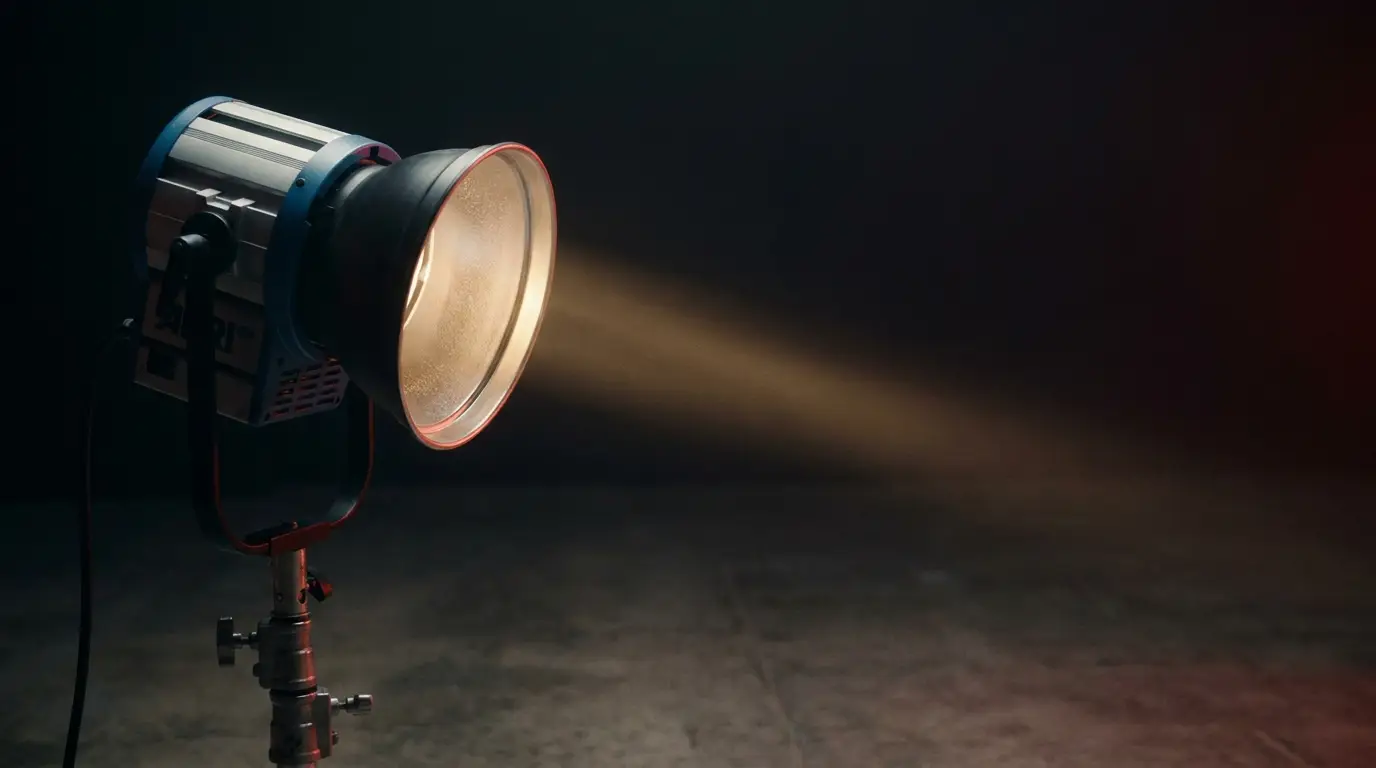
A COB ("chip on board") light is a single, powerful bulb-style source that puts out a strong, focused beam — like a spotlight versus a floodlight. On its own it's hard and dramatic; attach a modifier and it becomes a beautiful soft key. They cost more (roughly $200–$400 for solid entry-to-mid units), run hotter, and need sturdy stands, but they're the workhorse of polished setups.
Softboxes — The Light Shaper
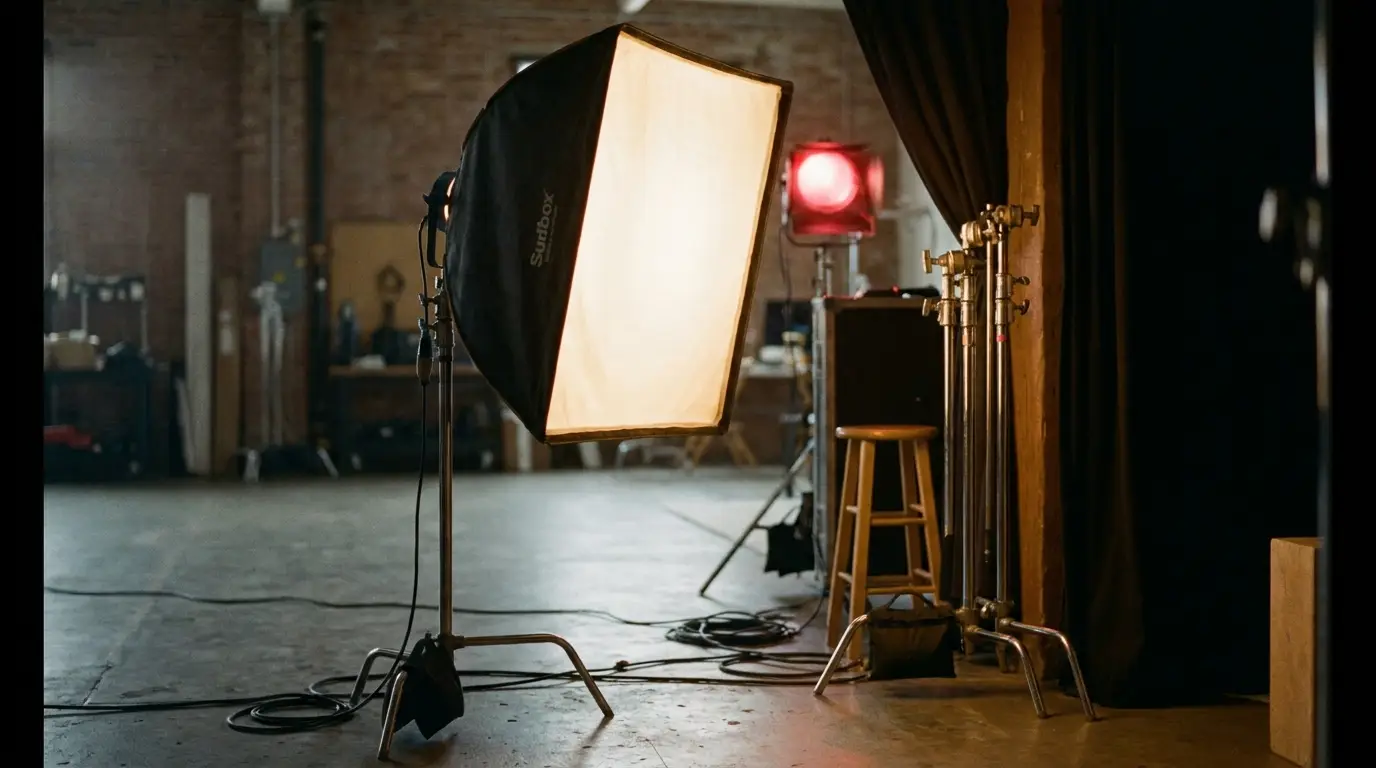
A softbox isn't a light — it's a modifier you attach to one. It makes the source bigger and wraps the light gently around a face (remember: bigger = softer). This is where harsh light becomes that creamy, professional look. A softbox on a COB light is a classic, can't-miss key-light combo.
Don't Forget the Boring-but-Critical Bits
- Sturdy light stands. A toppling light can break gear (or someone's day). Don't cheap out here, and use sandbags.
- Color quality (CRI). Look for a high CRI/TLCI rating (95+). Cheap lights render skin tones an ugly green; good ones make people look healthy and real.
- Bi-color or RGB. Bi-color lets you match warm indoor or cool daylight; RGB adds creative color for accents and backgrounds.
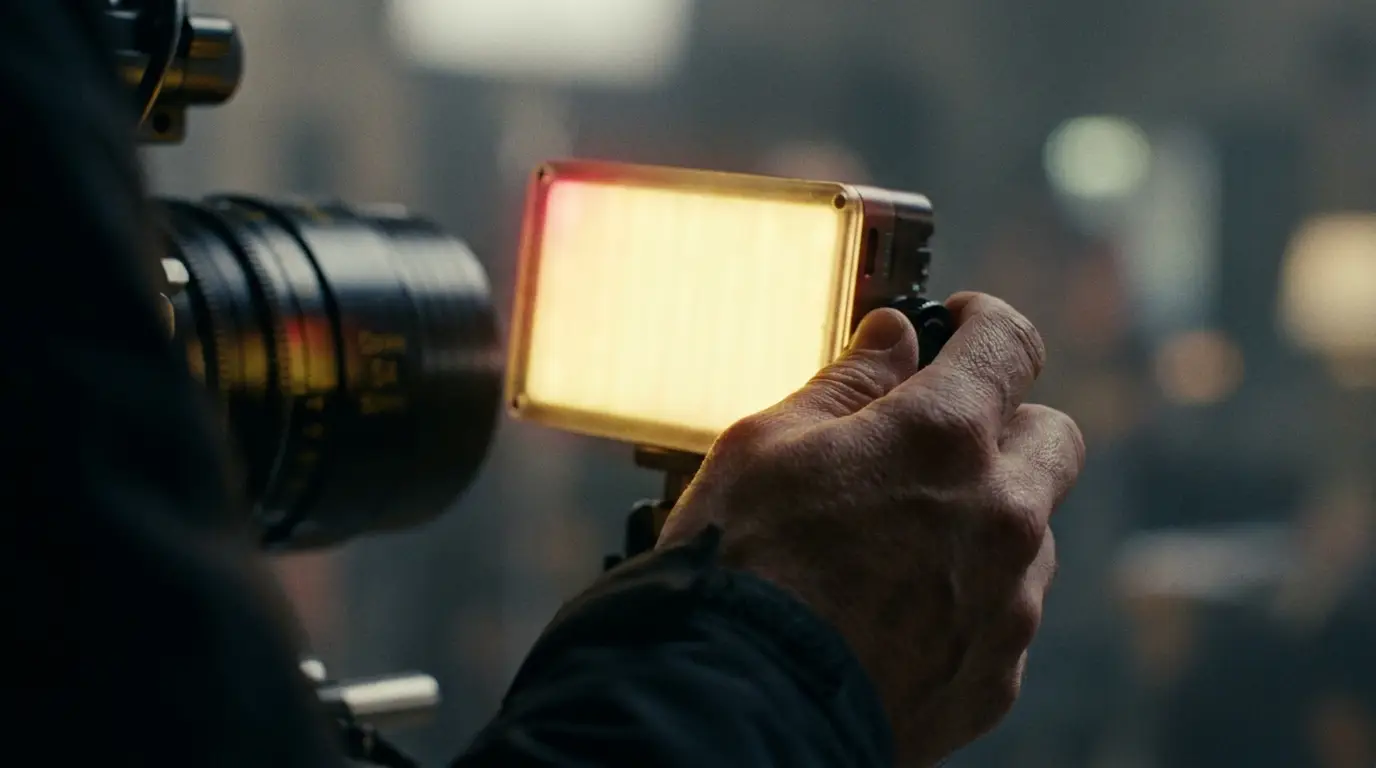
- A small portable LED. A pocket-sized panel is endlessly handy for fill, on-camera work, and tight spaces.
A Simple Starter Lighting Kit
- 1 bi-color LED panel or COB light (your key)
- 1 softbox to soften that key
- 1 white bounce board (cheap, instant fill)
- 1 small portable LED (fill / backlight / on-camera)
- 2 sturdy stands + sandbags
- High CRI (95+) on every light you buy
"You're not buying lights — you're buying control. The goal is light that does exactly what you tell it to."
Light It Like You Mean It
Start with one controllable light and a way to soften it, prioritize good color quality, and grow your kit one purpose at a time. Do that and you'll get a premium look for a fraction of what people assume it costs. (For how to actually place these lights, see our guide to interview lighting setups.)
Want the cinematic look without buying and hauling a single light? That's what we're here for. Let's talk about your project.

James is a creative professional and marketing leader with 20+ years across film, animation, broadcast production, and brand marketing. He founded MediaMarvels to help businesses tell their stories with a filmmaker's eye and a marketer's mindset.